Why Bear Spray, Not a Firearm
In bear country, the single most effective deterrent you can carry is bear spray — a high-volume canister of capsaicin (the compound that makes chili peppers hot) that creates an expanding cloud of irritant. Studies of bear encounters in Alaska found that bear spray stopped undesirable bear behavior in over 90% of cases, and people carrying it were rarely injured. Firearms, by contrast, require precise shots under extreme stress and a wounded bear can be more dangerous than before. For hikers, bear spray is lighter, faster to deploy, and far more forgiving.
But it only works if you do two things right: carry it where you can reach it in two seconds, and know how to deploy it before the moment arrives.
Choosing the Right Canister
Not all sprays are equal. Buy a product that is EPA-registered as bear spray — not personal-defense pepper spray, which has a shorter range and less volume.
- Capsaicin content: EPA-registered bear sprays contain 1.0–2.0% capsaicin and related capsaicinoids, the legal maximum range for the category.
- Spray distance: Look for a minimum range of 25 feet (about 8 m). Quality canisters reach 30–35 feet.
- Spray duration: At least 6 seconds of continuous spray, which lets you create a barrier and adjust your aim. Larger canisters give 7–9 seconds.
- Trusted brands: Counter Assault and UDAP are the standards used by guides and wildlife agencies.
Check the expiration date stamped on the canister. The propellant weakens over time, reducing range — replace expired spray and don't carry a canister past its date.
How to Carry It
This is where most people fail. Bear spray buried in your backpack is useless. A bear charge happens in seconds, and you will not have time to stop, drop your pack, and dig for it.
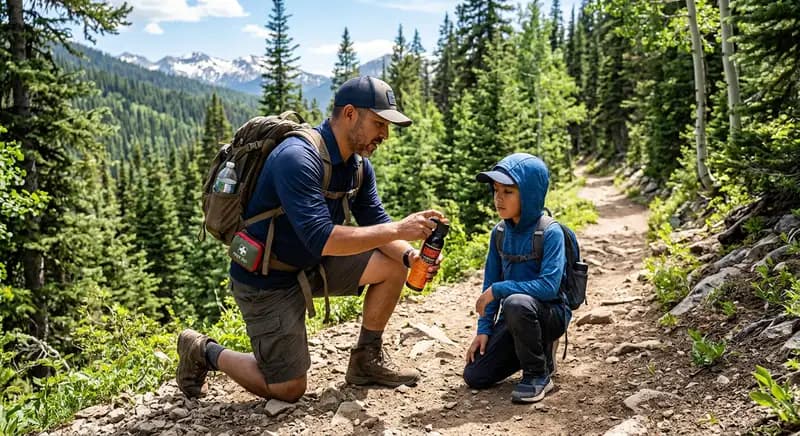
- Carry it in a chest holster or a hip/belt holster where your dominant hand can reach it instantly.
- Keep it accessible at all times on the trail — not just when you think a bear is near. Surprise encounters are the dangerous ones.
- If you're with a group, more than one person should carry spray, distributed across the group.
- In camp, keep it within reach at night — in your tent vestibule or beside your sleeping bag, not in the bear locker.
How to Deploy It
Practice the motion before you ever need it (with an inert training canister, available from the same brands). When a bear approaches or charges:
- Pull the canister and remove the safety clip. The clip flips up or slides off with your thumb — learn the motion by feel.
- Aim slightly downward, toward the bear's path — not directly at its face. You're creating an expanding cloud the bear runs into, and aiming low compensates for the upward drift of the spray.
- Spray in 1–2 second bursts when the bear is within about 30–60 feet, creating a wall of deterrent between you and the animal. Don't empty the whole canister in one blast — you may need a second engagement.
- Adjust for wind. If the wind is blowing toward you, the cloud can blow back into your own face, so account for it and angle accordingly. A strong headwind is the main limitation of bear spray.
- Once the bear stops or retreats, leave the area immediately — calmly, without running, while the bear is deterred.
What Bear Spray Is NOT
A dangerous and common misconception: bear spray is not like insect repellent. Never spray it on yourself, your tent, your gear, or around your campsite. The residue actually attracts bears once the initial irritant dissipates — the opposite of what you want. Bear spray is only ever deployed directly at an approaching or charging animal.
Travel and Storage Rules
- You cannot fly with bear spray — it's prohibited in both carry-on and checked luggage by the TSA. Buy it at your destination (outfitters near major trailheads stock it) and dispose of or gift it before flying home.
- Don't store it in a hot car. Heat builds pressure inside the canister and can cause it to leak or burst. Keep it cool and out of direct sun.
- Check the seal and nozzle before each trip to be sure nothing is clogged or corroded.
Common Mistakes
- Carrying it in your pack. The number-one error. If you can't draw and fire in two seconds, it can't protect you.
- Using personal pepper spray instead. Self-defense sprays have far less range and volume and are not designed to stop a bear.
- Spraying too early or emptying the can. Wait until the bear is within effective range, then use measured bursts.
- Spraying it on gear or your campsite as a 'repellent.' This attracts bears. Only ever spray a charging animal.
- Carrying an expired canister. Old propellant means reduced range when you need it most.
- Never practicing. Fumbling with the safety clip during a real charge costs the seconds that matter. Train the motion until it's automatic.